4-koma (yonkoma, “four frames”) is the Japanese comic strip: four panels of the same size stacked top to bottom, telling a complete beat in the space of a single column. It is the format behind newspaper classics and many slice-of-life manga, and it is the best training ground there is for timing. Below you can download free 4-koma templates, then learn the four-part structure that makes the strips work.
Quick Summary
- A 4-koma is four equal panels, read top to bottom.
- The structure is kishōtenketsu: setup, development, twist, conclusion.
- Panel 3 does the work. If the twist is predictable, the strip falls flat.
- Templates: two strips per page, or one strip with planning lines beside each panel.
Download the 4-koma templates
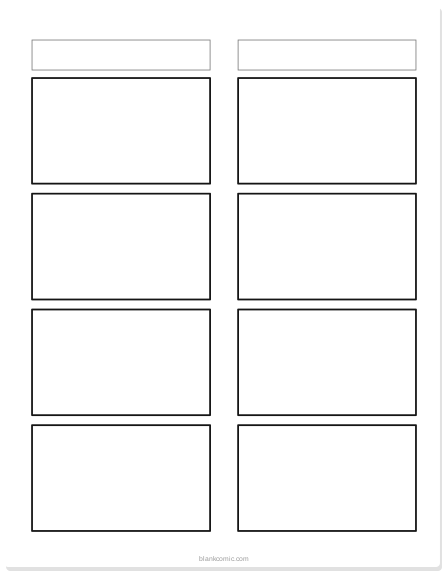
4-koma template, 2 strips per page
Two vertical strips with a title box above each. The layout of a printed yonkoma page.
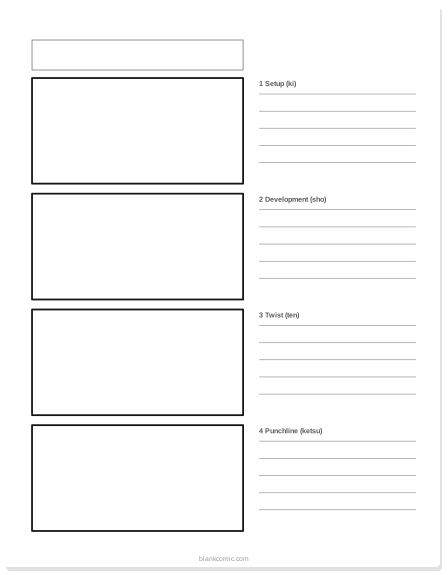
4-koma template with planning notes
One strip on the left and note lines beside each panel, labelled setup, development, twist and punchline.
Prefer a horizontal strip? Our comic strip templates include 3-panel and 4-panel landscape versions.
What is a 4-koma?
The word comes from yon (four) and koma (frame or panel). A 4-koma has four panels of equal size in a single vertical column, and the reader goes straight down. That fixed shape is the point: with no big panels or dramatic layouts to lean on, everything depends on what you put in each frame and when.
The format has deep roots in Japanese newspapers. Sazae-san by Machiko Hasegawa, one of the best-known examples, began in 1946 in a regional paper and ran in the Asahi Shimbun from 1949 until 1974. Later, whole magazines were devoted to 4-koma, and series such as Azumanga Daioh showed that four-panel strips could carry long-running characters and gentle, slice-of-life storytelling, not just gags.
| 4-koma (yonkoma) | Western comic strip | |
|---|---|---|
| Panels | Always four, equal size | Usually three or four, sizes can vary |
| Direction | Top to bottom, one column | Left to right, one row |
| Pages in books | Several strips side by side; in Japanese books the right column is read first | One strip per row |
| Typical tone | Gag or slice of life, often with recurring characters | Gag strip, often with a punchline |
Kishōtenketsu: the four-part structure
Most 4-koma follow kishōtenketsu, a four-part structure borrowed from classical Chinese and Japanese poetry. One part per panel:
| Panel | Part | Job | Ask yourself |
|---|---|---|---|
| 1 | Ki (setup) | Introduce the character and situation | Who is here and what is normal? |
| 2 | Shō (development) | Move the situation forward | What happens next, as expected? |
| 3 | Ten (twist) | Bring in something unexpected | What would the reader never guess? |
| 4 | Ketsu (conclusion) | Show the result or reaction | How does the character respond? |
Unlike a Western three-act plot, kishōtenketsu does not need conflict. The twist can be a surprise, a change of viewpoint or a quiet observation. That is why 4-koma can be funny, sweet or thoughtful with the same structure.
A worked example
| Panel | Picture | Text |
|---|---|---|
| 1 · Setup | Yuki sets five alarm clocks around her bed | Yuki: “Tomorrow I will NOT be late.” |
| 2 · Development | Morning. All five clocks ring at once | SFX: RRRING! |
| 3 · Twist | Yuki is fast asleep, hugging all five clocks. Silence. | (no text) |
| 4 · Conclusion | Her mother in the doorway, arms crossed | Mother: “It’s ten o’clock.” |
Tip: Write the punchline first, then work backwards. Knowing panel 4 tells you exactly what panels 1 and 2 must set up.
Seven tips for better 4-koma
- One idea per strip. Four panels have room for one beat, not two.
- Start in the situation. Panel 1 has no time for a long introduction.
- Keep the camera steady. Similar framing in panels 1 to 3 makes the change in panel 4 obvious.
- Use a silent panel. A wordless panel 3 or 4 creates timing that words cannot.
- Short dialogue. One or two small bubbles per panel; a 4-koma panel is narrow.
- Recurring characters. Readers who know a character need no setup, which frees panel 1.
- Title every strip. The title box at the top is part of the joke as often as not.
10 ideas to start a 4-koma
Pick one, write the setup in panel 1, and spend most of your time deciding what surprises the reader in panel 3.
- A character tries a new hobby and is suspiciously good at the wrong part of it.
- The cat sits on the one thing someone needs right now.
- A student studies all night for the wrong test.
- Two friends argue about something that turns out to be the same thing.
- Someone practices a big speech, and the listener is not who they think.
- The first day of a diet meets a birthday cake.
- A robot learns a human habit, slightly wrong.
- Somebody finally finds their lost item, in the worst possible place.
- A weather forecast is very confident.
- A tiny pet reacts to a huge event as if it were nothing.
Common 4-koma mistakes
| Mistake | Fix |
|---|---|
| The twist arrives in panel 4 | Move it to panel 3 and use panel 4 for the reaction |
| Two jokes in one strip | Keep the stronger one; save the other for its own strip |
| Panels change size | Keep all four equal; the rhythm depends on it |
| Panel 1 explains too much | Show the situation in the picture, cut the caption |
| Bubbles fill the panel | Shorten dialogue to one line per bubble where possible |
Layout and sizing
Keep the four panels exactly the same size and the gutters between them even. If you draw digitally, a tall narrow canvas split into four works well; for a printed book, two or more strips sit side by side on a page. Templates for full manga pages, with trim and bleed guides, are in blank manga panels, and the difference between Japanese manuscript paper and Western templates is covered in manga manuscript paper vs Western comic templates.
4-koma on social media
A vertical 4-koma is already phone-shaped, which makes it a natural fit for Instagram, Threads and X. For a square post, split the strip into a 2 × 2 grid and read it left to right, top to bottom, or post one panel per image in a carousel so the punchline arrives on the last swipe.
Making a 4-koma in BlankComic
In the BlankComic editor, choose Custom in Layout and enter a tall, narrow size (for example 300 × 1000 px), then split the page into four equal panels with H. Add bubbles and a title, and export PNG for posting or PDF for print. If you want the full manga workflow, including the name (rough layout) stage, read how to make manga online.
Frequently Asked Questions
What is a 4-koma?
A 4-koma (yonkoma) is a Japanese comic strip of four equal panels arranged vertically and read from top to bottom. It usually follows the kishōtenketsu structure.
What does kishōtenketsu mean?
It is a four-part structure: ki (setup), shō (development), ten (twist) and ketsu (conclusion). In a 4-koma each part gets one panel.
How do you read a page of 4-koma strips?
Each strip is read top to bottom. In Japanese books with several strips on a page, the right-hand strip is read first; in English layouts, left to right is usual.
What is the difference between a 4-koma and a 4-panel comic strip?
A 4-koma stacks four equal panels vertically; a Western 4-panel strip usually runs them left to right in a row and may vary panel sizes.
Are these 4-koma templates free?
Yes. Both templates are free to download and print in A4 and US Letter for personal and classroom use.
Sources and further reading
Facts in this guide were checked against the following resources. All are free to read.
- Wikipedia, “Sazae-san”: Start in 1946, Asahi Shimbun run from 1949 to 1974, yonkoma format.